
Walk-In Showers in Dallas, Built to Last
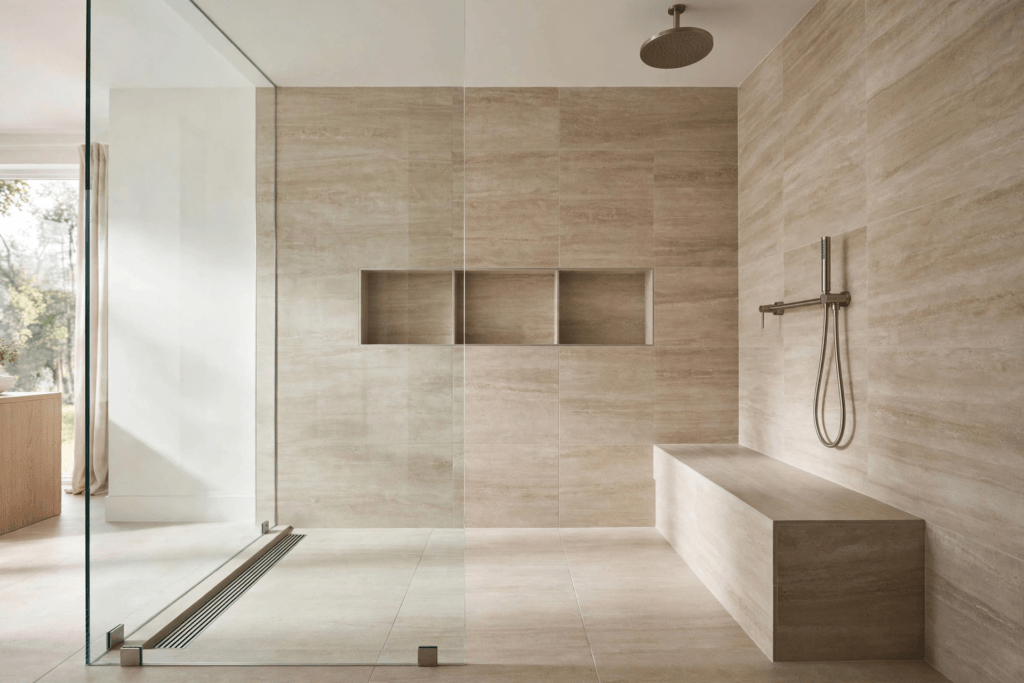
A great shower is the part of the bathroom you use every single day — and the part most remodels get wrong. Tile over drywall with no waterproofing. A curb that trips you. Fixtures placed where the plumber found it convenient, not where a human stands.
We build walk-in showers the other way: fully waterproofed systems behind every wall, proper slope to the drain, and layouts designed around how you actually shower. In Dallas water conditions, that engineering matters more than the tile you pick.
Get a Free Estimate
Call or text +1 (972) 833-6266 — Monday–Sunday, 7:00 AM–8:00 PM CT. Free on-site consultation with a written, itemized quote.
Curbless and Accessible Options
A curbless (zero-entry) shower has no lip to step over — you walk straight in. It’s the safest option for aging in place and the cleanest look for modern design. Proper curbless construction needs the right floor slope and drain placement; done right, it’s the best shower you’ll ever use. We also build low-threshold showers, grab-bar blocking inside the walls, benches, and hand-held fixtures on slide bars.
Waterproofing: The Part You Never See
This is where showers succeed or fail, and it’s invisible on reveal day. Every walk-in shower we build gets a complete waterproofing system behind the tile — membranes on walls and floors, sealed corners and penetrations. Most shower failures we get called to fix trace back to this exact step being skipped.
Tile, Glass, and Bench Options
- Tile. Large-format porcelain for a seamless look, classic subway for timeless appeal, textured or mosaic for slip-resistant floors — with hard-water-friendly choices.
- Glass. Frameless panels for the open walk-in feel; properly treated glass resists spotting far longer than untreated.
- Benches and niches. Corner, fold-down, or full-length benches plus recessed niches — designed before tile goes up, not bolted on after.
Converting an unused tub into a walk-in shower? That’s our most requested version of this project — see tub-to-shower conversions.
Groutless Shower Wall Options
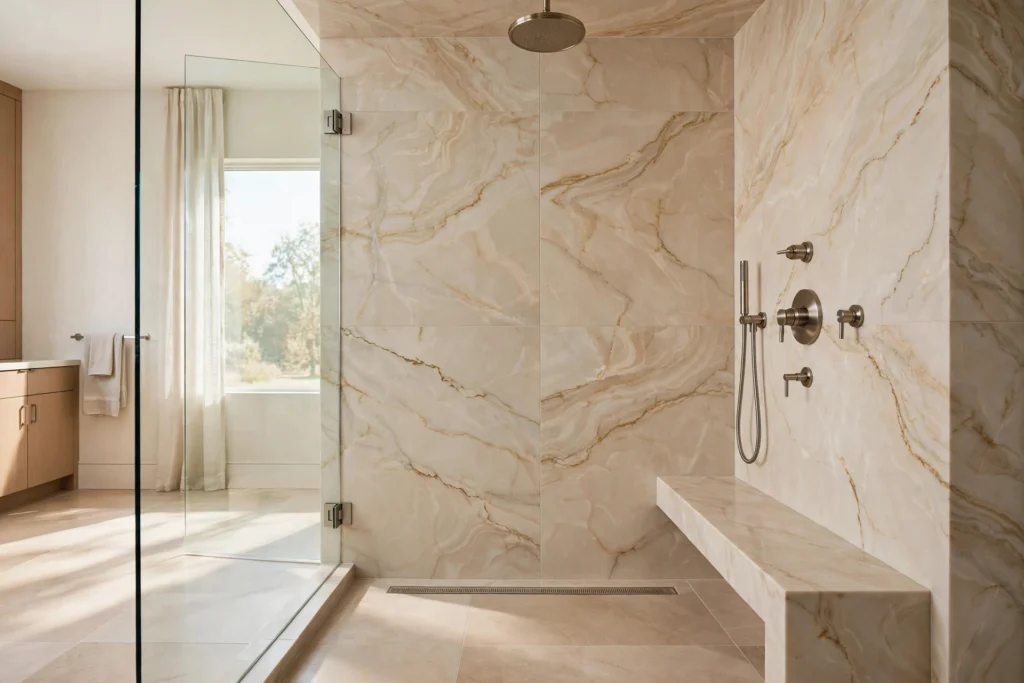
If scrubbing grout lines is your least favorite part of owning a shower, groutless wall systems solve the problem at the source. Instead of hundreds of small tiles, shower walls are covered with large-format panels — typically 12×24 inches or larger, sometimes full-height porcelain or ultracompact slabs — so a wall may have just a few seams instead of a full grid of grout.
The benefits go beyond cleaning. Fewer seams mean fewer places for soap scum and mildew to hold on, and non-porous slab materials never need sealing the way natural stone does. Large panels also make a small Dallas shower feel bigger, since the eye reads one continuous surface instead of a tiled grid.
There are a few ways to get the look. Large-format porcelain panels are the most popular choice and come in stone-look finishes that mimic marble or travertine. Ultracompact slabs (such as Dekton) are the premium option — non-porous, heat- and UV-resistant. Acrylic wall panels are the budget route: fully grout-free and quick to install, though they do not match the high-end look of slab. Any of these pair well with a frameless glass enclosure and a rainfall showerhead for a true walk-in feel.
Expect slab shower walls to cost more than standard ceramic tile — exact pricing depends on shower size, slab material, and any plumbing changes. See our bathroom remodel cost guide for current estimate ranges, or call +1 (972) 833-6266 for a free estimate.
Dallas Hard-Water Material Notes
The City of Dallas Water Utilities reports hardness of 12–17 grains per gallon. On a shower — the wettest surface in your home — that means grout chosen for stain resistance, glass with protective treatment, and fixtures engineered against mineral buildup. We specify all three from the start, because a beautiful shower that spots and pits in two years isn’t a good shower.
What Determines the Cost
- Size and layout. Enlarging the footprint or moving the drain adds labor; a same-footprint replacement is most efficient.
- Waterproofing system. A complete membrane system costs more than shortcuts — it’s the difference between a 5-year shower and a 25-year one.
- Tile and glass. Frameless glass and large-format tile are premium; smart design delivers most of the look at lower tiers.
- Fixtures. Basic valve versus thermostatic controls, rain heads, body sprays, and hand showers — options at every budget.
Full local breakdown in our Dallas bathroom remodel cost guide.
Step Into a Better Shower
Call or text +1 (972) 833-6266 — free estimate, Monday–Sunday 7 AM–8 PM CT. Or email remodelingbathroom16@gmail.com.
Walk-In Shower FAQs
How much does a walk-in shower cost in Dallas?
It depends on size, tile, glass, and whether plumbing moves. Our cost guide covers the factors; your free estimate gives the exact price.
What’s the difference between curbless and low-threshold?
Curbless has zero step — the bathroom floor flows straight into the shower. Low-threshold has a small curb. Curbless is best for accessibility and modern looks; low-threshold is simpler to build.
Do I need waterproofing behind the tile?
Absolutely — tile and grout aren’t waterproof. Without a membrane system, water reaches the wall cavity and causes mold and structural damage. Every shower we build is fully waterproofed.
Can you convert my tub into a walk-in shower?
Yes — assessed during the free estimate. Details at tub-to-shower conversions.
What areas do you serve?
We’re based at 10215 Scyene Rd, Dallas, TX 75227, serving Lake Highlands, Lakewood, Oak Cliff, the M Streets, Preston Hollow, Highland Park, Uptown, East Dallas, and North Dallas.
How much does a walk-in shower installation cost in Dallas?
Walk-in shower installations in Dallas typically range from $5,000 to $12,000 depending on size, tile, glass, and plumbing work. Call +1 (972) 833-6266 for a free estimate.
What is the best size for a walk-in shower?
A comfortable walk-in shower is at least 36 x 36 inches, though 42 x 60 inches or larger feels truly spacious. We will measure your space and recommend what fits.
Are walk-in showers good for aging in place?
Yes — curbless or low-threshold entries, grab bars, and built-in benches make walk-in showers one of the safest options for aging in place.
Frameless glass or shower curtain — which is better?
Frameless glass looks modern and makes the bathroom feel larger, while a curtain is budget-friendly. Glass is the most popular choice in our Dallas remodels.
How long does a walk-in shower install take?
Most walk-in shower projects take 4 to 7 days once work starts, depending on tile complexity and whether plumbing moves.
What is a groutless shower?
A shower whose walls are covered with large-format panels or slabs instead of small tiles, so there is no grid of grout lines to scrub. Seams are limited to a few panel joints sealed with color-matched silicone.
What materials are used for groutless shower walls?
Large-format porcelain panels, ultracompact slabs such as Dekton, quartz slabs, and acrylic panels. Porcelain and ultracompact slabs are non-porous and need no sealing; natural stone slabs look luxurious but need periodic resealing.
Are groutless showers easier to clean?
Yes — that is the main appeal. Fewer grout lines mean less scrubbing and fewer spots for mildew. Non-porous surfaces wipe down with a squeegee and a mild cleaner.
How much do groutless slab shower walls cost?
They typically cost more than standard ceramic tile, but pricing varies by shower size, slab material, and plumbing changes. These are estimates, not quotes — see our bathroom remodel cost guide for Dallas ranges, or call +1 (972) 833-6266 for a free estimate.
Can I get a groutless shower in a small bathroom?
Yes. Large panels make small showers feel larger by removing the visual grid of grout lines. Proper waterproofing behind the panels matters just as much as the finish — a good installer waterproofs the substrate first.