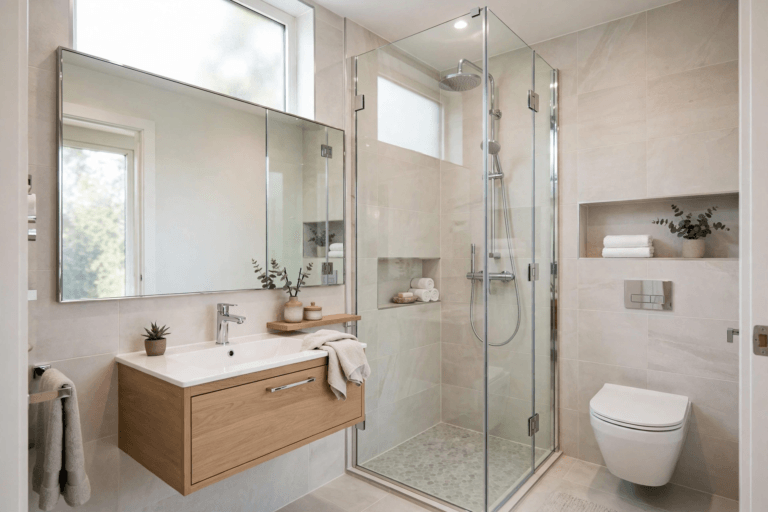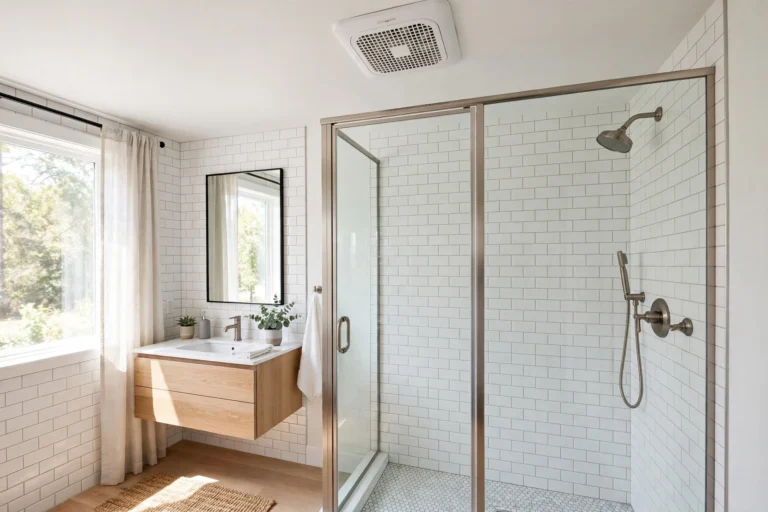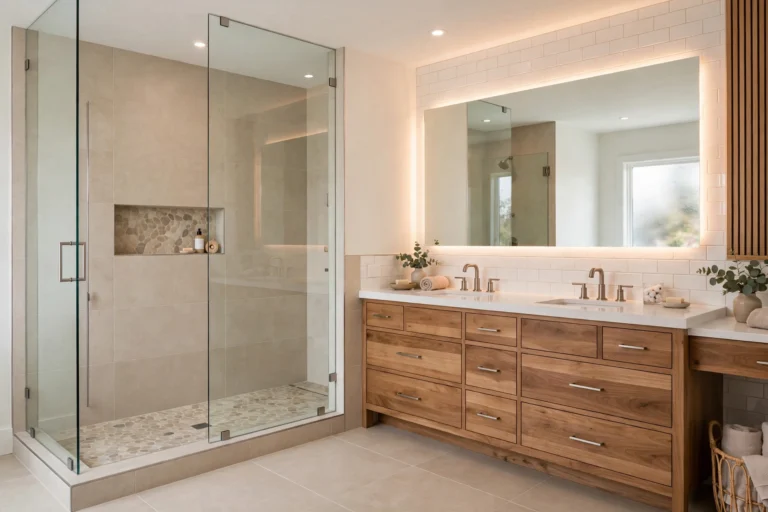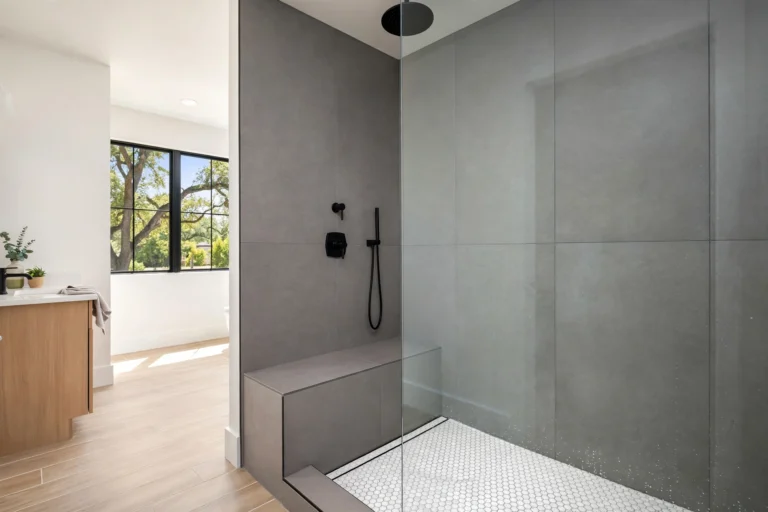
Choosing your shower walls is one of the first decisions in any bathroom remodel — and it locks in your budget, your cleaning routine, and your look for the next 15 to 20 years. In Dallas, the choice usually comes down to two contenders: classic ceramic or porcelain tile, or modern acrylic wall panels. The right pick depends on your budget, your style, and how much maintenance you’re willing to live with. Here’s an honest side-by-side with current Dallas-market costs.
Planning a shower remodel? Call +1 (972) 833-6266 for a free, no-pressure estimate — we’ll help you pick the wall material that fits your space and budget.
Cost at a glance: tile vs. acrylic in Dallas
Cost is usually the deciding factor, so let’s start there. Acrylic wins on both materials and labor. Mid-range acrylic panels run $1,000–$5,000 for materials, and a full installed acrylic shower commonly lands between $8,000–$15,000 depending on size and finishes. Tile costs more at nearly every step: ceramic and porcelain run $2–$15 per square foot for materials, and installed tile shower walls typically cost $15–$50 per square foot — more for glass, mosaic, or natural stone ($40–$200+ per square foot). Labor is the bigger gap: tile needs skilled installation plus waterproofing behind it, which alone runs $2,000–$5,000 on a typical project. These are planning estimates, not quotes. For the full picture, see our Dallas bathroom remodel cost breakdown and our walk-in shower cost guide.
Acrylic shower walls: the pros
Fast installation. Acrylic panels go up in 1–2 days, versus 5–10 days for tile. If you only have one bathroom, that speed matters. Our bathroom remodel timeline shows how wall choice affects your whole project schedule.
Grout-free, easy cleaning. This is acrylic’s superpower: no grout lines to scrub, seal, or regrow mold. A wipe-down with mild soap or white vinegar is usually enough.
Fully waterproof. Acrylic panels are non-porous, so water can’t seep behind them the way it can through aging grout — a real advantage in busy family bathrooms and Dallas’s humid summers.
Lower upfront cost and warmer feel. Panels plus a quicker install usually mean a meaningfully smaller bill than tile, and acrylic doesn’t have tile’s cold, hard feel underfoot and against your shoulders.
Acrylic shower walls: the cons
It can scratch. Abrasive cleaners and scouring pads can dull or discolor acrylic, so you must clean it gently. Minor scratches can sometimes be buffed out; deep damage usually can’t.
Hard to repair. If a panel cracks, you generally have to replace the entire panel — there’s no swapping one piece the way you can with tile.
Limited design options and shorter life. Acrylic comes in far fewer colors, patterns, and textures than tile (the range is growing, with some panels now mimicking stone). Expect 15–20 years from quality panels; lower-end ones can fade sooner.
Tile shower walls: the pros
Unlimited design. Ceramic, porcelain, glass, mosaic, natural stone — tile offers endless colors, sizes, and patterns. It’s the only choice for a truly custom look, which is why it dominates master bathroom remodels in higher-end Dallas neighborhoods.
Tough and long-lasting. Tile is scratch-resistant and hard-wearing, and a well-built tile shower can last 15–50 years depending on materials and upkeep.
Easy spot repairs and strong resale appeal. Cracked a tile? Replace just that tile. And buyers read tile as premium and custom — the safer bet when resale value is part of the equation.
Tile shower walls: the cons
Higher cost, longer install. Tile runs roughly two to three times the cost of acrylic once materials, waterproofing, and skilled labor are in. Installation takes 5–10 days — waterproofing, setting tile, grouting, sealing — and it demands real expertise, since a bad tile job can leak behind the walls.
Grout maintenance. This is tile’s ongoing tax. Grout needs regular scrubbing and resealing every few years to prevent water intrusion and mold. In a humid bathroom, neglected grout is the #1 cause of shower water damage.
So which one is right for your Dallas bathroom?
Choose acrylic if your budget is tight, you want the project done fast (one-bathroom households, rentals, quick refreshes), or you want the lowest-maintenance shower possible. It’s also a smart pairing for a tub-to-shower conversion, where speed and simplicity keep the project affordable.
Choose tile if this is your forever home, you want a custom designer look, you’re remodeling a master bath where resale matters, or you simply love the feel and permanence of real tile. It costs more and asks more in maintenance — but pays it back in beauty and longevity.
A middle path: some Dallas homeowners pair tile on the shower floor with acrylic panels on the walls, or choose large-format porcelain tiles with minimal grout lines — most of the tile look with far less grout to maintain. If you’re leaning toward a full custom shower, our walk-in shower page shows popular Dallas configurations, and our small bathroom ideas help if you’re working with a tight footprint.
Get a free estimate on your shower walls
Still deciding between tile and acrylic? Talk it through with someone who installs both every week. Call +1 (972) 833-6266 — Bathroom Remodeling Dallas — for a free, no-pressure estimate. We’ll look at your space, walk through material samples and real costs, and help you pick the wall that fits your budget, timeline, and the way you actually live.
Which is cheaper: tile or acrylic shower walls?
Acrylic is cheaper on materials and labor. Mid-range acrylic panels run $1,000–$5,000 for materials and install in 1–2 days, while installed tile shower walls typically cost $15–$50 per square foot and take 5–10 days. Tile generally ends up costing two to three times more overall. See typical shower project numbers in our walk-in shower cost guide.
How long do acrylic shower walls last?
Quality acrylic panels last about 15–20 years with basic care — wipe down with mild soap or vinegar, and avoid abrasive cleaners. Lower-end panels can fade sooner. A well-maintained tile shower can last longer (15–50 years), but its grout needs regular resealing. For full project costs, see our Dallas bathroom remodel cost breakdown.
Does tile or acrylic add more resale value in Dallas?
Tile generally adds more resale appeal — buyers read it as premium and custom, which matters in competitive Dallas neighborhoods. Acrylic is fine for a refresh or rental, but if resale is part of your plan, tile is the stronger investment. Our master bathroom remodeling guide covers which upgrades buyers notice most.
Which is easier to keep clean — tile or acrylic?
Acrylic, by a clear margin. Its grout-free, non-porous surface needs only a wipe-down. Tile cleans easily too, but grout lines collect soap scum and hard-water deposits and need scrubbing plus resealing every few years to prevent mold — a bigger job in humid Dallas bathrooms. For low-maintenance ideas, see our small bathroom guide.
Can acrylic shower panels be installed over existing tile?
Often, yes — if the existing tile is sound, firmly attached, and the walls are plumb, panels can go over it, saving demolition time and cost. Damaged tile, loose pieces, or water damage behind the walls must be fixed first, and the added thickness can complicate fixtures and trim. A tub-to-shower conversion is where this question comes up most — have a pro assess your walls first.