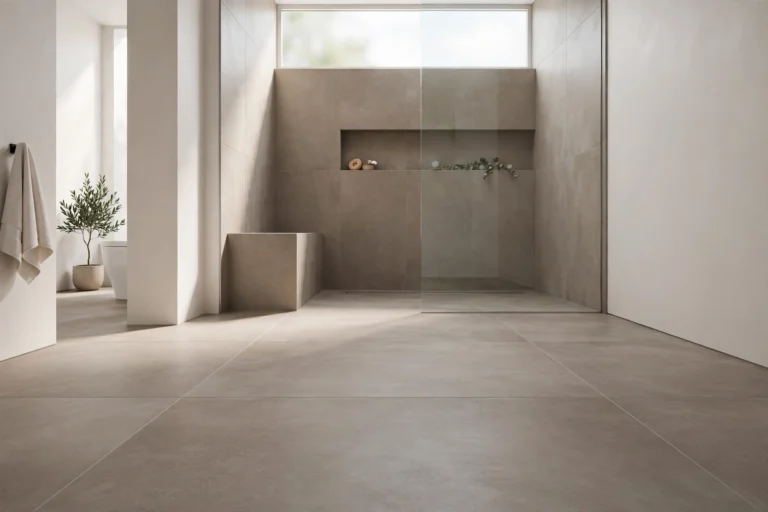
It’s the least glamorous fixture in your bathroom — a plain grille in the ceiling most people never look at twice. But your exhaust fan is quietly doing the most important job in the room: hauling out the steam from every shower before it can turn into peeling paint, musty grout, and a mold problem hiding behind your tile. Here’s why it deserves more respect than it gets, and how to make sure yours is actually doing the work.
Remodeling a bathroom in Dallas? Ventilation upgrades are cheapest while the walls are open. Call +1 (972) 833-6266 for a free estimate — we’ll make sure your new bathroom breathes as good as it looks.
1. The fan you have is probably too small
The rule of thumb for bathroom ventilation is simple: you need about 1 CFM (cubic foot per minute) of airflow per square foot of bathroom, with a minimum of 50 CFM even for a tiny powder room. So a 100-square-foot master bath wants roughly a 100 CFM fan — and bathrooms over 100 square feet need extra capacity per fixture (about 50 CFM more per tub, shower, or toilet, and 100 extra for a jetted tub).
Most builder-grade fans fail this math badly. The Home Ventilating Institute recommends about 8 air changes per hour for real moisture control — yet a cheap 50 CFM fan in a 100-square-foot bathroom delivers only about 3. That fan is running at less than half of what the room needs, and you can prove it in sixty seconds with the tissue test: hold a single-ply tissue near the grille while the fan runs. If it pulls firmly against the grille, you’re getting real suction. If it flutters or falls, the fan is underperforming — usually from a dirty grille, a blocked duct, or a motor that’s simply undersized. A small bathroom remodel is the perfect moment to size the fan correctly, because small rooms actually fog up the fastest.
2. Where the air goes matters more than the fan
Here’s the mistake we see most often in older Dallas homes: an exhaust fan that dumps warm, moist air into the attic instead of venting it outside. Building code is unambiguous about this — exhaust must discharge directly to the outdoors, never into an attic, crawlspace, or wall cavity. Venting into an attic raises the dew point up there, condenses water on the underside of the roof sheathing, and turns roof decking and framing into a mold colony. That kind of hidden damage can cost $10,000–$25,000 to repair — versus a proper through-the-roof or through-the-wall vent installed during a remodel for a fraction of that.
If your home was built before 2000, it’s worth checking where your fan exhausts before you assume it’s fine. The exterior termination needs a working backdraft damper (so pests and cold air can’t blow back in) and should sit a few feet clear of windows, doors, and air intakes. Venting work that penetrates the roof or exterior wall typically falls under a permit, so plan it into the project from the start — our Dallas bathroom remodel timeline shows where the ventilation rough-in fits in the sequence.
3. Placement and the 20-minute rule
A fan can be the right size and still fail if it’s installed badly. Put a single fan near the shower or tub — that’s where the moisture originates — and keep it well away from the HVAC supply vent, so incoming conditioned air doesn’t short-circuit straight out the exhaust. The bathroom door should be undercut (or have a transfer grille) so enough replacement air can flow in; a fan starved of makeup air just whirs without moving much moisture.
Then there’s the human factor: most people flip the fan off the second they step out of the shower, which is exactly when the room is wettest. A fan should run at least 20 minutes after every shower to clear residual humidity. Timer switches make this automatic — you set it and walk away. Better still are humidity-sensing fans that switch themselves on when moisture rises and shut off when the air is dry. ENERGY STAR–certified fans use roughly half the energy of standard models, so running one longer costs pennies while saving you thousands in moisture damage.
4. Quiet fans actually get used
Fan noise is measured in sones, and the number tells you whether the fan will get switched on at all. Anything above 2 sones is a loud, rattling distraction — the kind of fan people refuse to run. A fan rated 1.5 sones or lower is barely audible, and modern DC-motor models are both quiet and efficient. This matters more than it sounds: a powerful fan that everyone leaves off protects nothing.
Cost-wise, upgrading is one of the cheapest improvements in a remodel. Fan units with humidity sensors and quiet DC motors typically run $150–$250 for the hardware; a straightforward replacement installation usually lands around $200–$500, while a new installation with fresh ductwork can run $400–$1,200 depending on access and routing. Compare that to the average bathroom mold remediation job — typically $3,000–$10,000 — and the fan starts to look like the bargain it is. See our Dallas bathroom remodel cost guide for how a ventilation upgrade fits into the full budget.
5. Dallas humidity raises the stakes
Dallas summers are brutally humid, and the EPA recommends keeping indoor relative humidity between 30% and 60% to discourage mold. A hot shower can spike a bathroom well past 80% humidity — and in our climate, the replacement air coming in to replace the exhausted air is already moisture-laden. An undersized or missing fan simply can’t win that battle.
This is why moisture damage shows up first in the details: caulk turning black, grout that never quite dries, paint peeling off the ceiling above the shower, musty smells that air freshener can’t cover. Choosing the right wall finishes helps too — see our comparison of tile vs. acrylic shower walls for how surface choice affects moisture resistance — but no finish survives without air movement. Large open walk-in showers and steam showers push even more vapor into the room, so if you’re planning one, bump your fan capacity 20–30% above the baseline.
6. The perfect time to upgrade is during a remodel
Adding or replacing a fan after the fact means cutting drywall, patching, and repainting. During a master bathroom remodel, the ceiling is already open — the new fan, ductwork, and roof or wall penetration get installed in the same pass as the plumbing and electrical, at a fraction of the standalone cost and hassle. It’s also the moment to add a second fan for a separate toilet compartment or an oversized shower zone, and to route ducting correctly the first time.
If you’re converting a tub to a shower, plan ventilation into that project too: a tub-to-shower conversion typically produces more steam than a shower-tub combo because there’s no shower curtain or glass door containing it. A correctly sized, correctly ducted fan is the difference between a conversion that stays fresh for years and one that develops mystery moisture problems in the second year.
Your exhaust fan will never be the showpiece of your bathroom. But it’s the fixture that protects everything else — the tile, the paint, the drywall, the framing — from the one thing bathrooms produce in abundance: moisture. If yours is loud, weak, or venting into the attic, fix it while the walls are open. Call +1 (972) 833-6266 — Bathroom Remodeling Dallas — for a free estimate on a remodel with ventilation done right from day one.
How do I know if my bathroom exhaust fan is working properly?
Try the tissue test: hold a single-ply tissue near the grille while the fan runs. If it pulls firmly against the grille, the fan has good suction. If it flutters or falls, the fan is underperforming — usually from a dirty grille, a blocked or disconnected duct, or an undersized motor. Also check that the exterior vent cap isn’t blocked by debris or nesting birds and that the backdraft damper opens freely. If the grille is caked in dust, removing and cleaning it can restore 20–30% of lost performance.
What size exhaust fan does my bathroom need?
Use the rule of thumb of 1 CFM per square foot of bathroom, with a minimum of 50 CFM for small bathrooms. A 100-square-foot bathroom needs about 100 CFM. For bathrooms over 100 square feet, add roughly 50 CFM per tub, shower, or toilet, and 100 CFM for a jetted tub. Bathrooms with steam showers or soaking tubs should go 20–30% above the baseline. For what a right-sized fan costs to install, see our Dallas bathroom remodel cost guide.
Can I just open the window instead of running the exhaust fan?
In Dallas, usually not — at least not reliably. Summer air here is already humid, so an open window doesn’t pull moisture out of the room the way a ducted fan does, and most showers happen in the early morning or evening when a window may be closed for privacy or security. Building code generally requires mechanical ventilation for bathrooms without a qualifying openable window, and even with one, a fan does a far better job in our climate. Running a quiet, correctly sized fan is the dependable option.
Why can’t my bathroom fan vent into the attic?
Venting warm, moist air into an attic is a code violation and one of the most destructive moisture mistakes a home can have. The moisture condenses on the underside of the roof sheathing, feeding mold growth and wood rot in the roof decking and framing — damage that can cost $10,000–$25,000 to repair. Code requires exhaust to discharge directly outdoors through a roof cap or wall vent with a working backdraft damper. Venting work that penetrates the roof or wall usually needs a permit, so plan it into your project.
Should I replace the exhaust fan during a bathroom remodel?
Yes — it’s one of the highest-value upgrades you can make while the walls are open. A quiet humidity-sensing fan typically adds only $150–$250 in hardware plus installation labor, which is trivial compared to cutting, patching, and repainting drywall to do it later. It’s also the right time to correct bad ducting (like attic venting), add a second fan for a separate toilet area, or upsize capacity for a walk-in shower or tub-to-shower conversion that will generate more steam.