Every shower needs a home for shampoo, soap, and the family’s ever-growing bottle collection. When you’re remodeling, that choice usually comes down to two options: a shower niche recessed into the wall, or a corner shelf mounted on top of it. Same problem — very different cost, installation, cleaning, and looks. Planning a remodel? Call +1 (972) 833-6266 and we’ll help you plan storage that fits how you shower.
What is a shower niche?
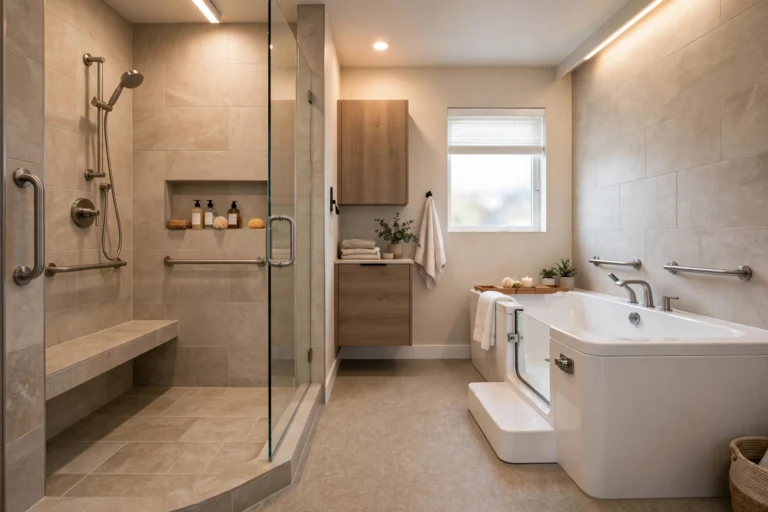
A shower niche is a recessed storage cubby built directly into the shower wall — tiled over and sitting flush with the surrounding tile, about 3.5–5 inches deep. Because it sits inside the wall cavity, it takes up zero shower space. The catch: it must be planned during the remodel. The opening has to fit between wall studs, avoid plumbing lines, and be fully waterproofed with the rest of the shower — a niche without proper waterproofing is a leak waiting to happen. The natural time to add one is during a full shower build, for example as part of a tub-to-shower conversion, when the wall is already open.
What is a corner shelf?
A corner shelf is a surface-mounted platform — glass, metal, or stone — installed onto the shower corner. Some mount with adhesive or suction cups (no tools, rental-friendly); others get set into the tile bed during construction for a permanent, grout-lined finish. Corner shelves are the quick, affordable fix: most aftermarket shelves cost under $100. The trade-offs: they protrude into the shower footprint — a real consideration in tight 32-inch showers — and because they sit proud of the wall, soap scum collects around their edges and brackets, so they need more frequent cleaning than a flush niche.
Shower niche vs. corner shelf: side by side
| Feature | Shower Niche | Corner Shelf |
|---|---|---|
| Appearance | Built-in, seamless, modern | Added-on; can look stylish but often reads as an afterthought |
| Shower space | Zero — recessed into the wall | Protrudes into the shower footprint |
| Installation | During remodel only; professional work | Aftermarket in minutes; tiled-in versions during a remodel |
| Cost | Higher — kit plus framing, waterproofing, and detailed tile labor | Low — often under $100 aftermarket |
| Cleaning | Easy if shelves are sloped and it’s out of the direct spray | More cleaning around edges, brackets, and grout lines |
| Durability | Permanent — nothing to knock loose | Adhesive/suction mounts can loosen; cheap brackets can rust |
| Best for | Full remodels and new builds | Rentals, quick refreshes, and tight budgets |
What each one really costs in 2026
These are estimates, not quotes — prices vary by bathroom size, material grade, and contractor. Aftermarket glass or stainless corner shelves run $20–$80 each, and shelves tiled in during a remodel add roughly $50–$150 in materials plus a modest amount of labor. A niche costs more, but most of the cost is labor, not materials: framing around the opening, waterproofing the recess, and the careful tile work around it. All in, a niche typically adds several hundred dollars to a shower project. On a full remodel already running into the thousands — see our Dallas bathroom remodel cost guide — that’s a modest upcharge with high visual payoff. As a standalone addition to an existing shower, though, opening the wall just for a niche rarely pencils out. That’s when a corner shelf wins.
Installation and waterproofing: the part most people miss
A niche can’t be an afterthought. Studs can’t be cut arbitrarily, and the recess must be waterproofed continuously with the shower. Keep the niche out of the direct spray zone where possible, and slope its shelves slightly so water drains instead of pooling. Placement matters for comfort too: most pros set the niche base 36–40 inches off the shower floor, with higher shelves at 48–66 inches. Corner shelves are far more forgiving — stick-on versions take minutes, and tiled-in ones just get worked into the tile schedule. Our bathroom remodel timeline shows where storage decisions fall in the project sequence.
Cleaning and long-term durability
A well-built niche is easy to live with: smooth tiled surfaces wipe down, and sloped shelves drain on their own. The weak points are flat shelves that hold standing water and niches placed directly in the spray — both breed grime in Dallas humidity. (Good ventilation helps everything last longer — see our exhaust fan guide.) Corner shelves need more attention: water spots on glass, soap buildup along brackets and grout lines, and rusting brackets on cheaper models. Our tile vs. acrylic shower walls comparison covers which surround each storage type pairs with best.
Which should you choose?
Choose a shower niche if you’re already remodeling or building. You get the seamless built-in look, zero intrusion into the shower, and nothing to knock over — ideal for small bathrooms where every inch counts and walk-in showers where clean lines are the whole point.
Choose a corner shelf if you’re not opening walls. Renters, quick refreshes, and tight budgets get real storage in an afternoon for under $100 — no demo, no tile work, no regrets.
Do both if the layout allows. A niche for daily essentials plus a corner shelf for the extras — a setup we see a lot in shared family showers and master bathroom remodels, where storage is part of the design, not an afterthought.
Get shower storage that’s part of the design
A shower is only as good as its storage. Whether you want a built-in niche, tiled corner shelves, or both, the decision is cheapest and cleanest when it’s made before tile goes up — not after. Planning your Dallas bathroom remodel? Call +1 (972) 833-6266 for a free consultation, and we’ll design storage that fits how your family actually showers.
Can you add a shower niche to an existing shower without a full remodel?
Technically yes, but it means cutting open the tiled wall, reframing, and re-waterproofing — the cost and mess usually exceed the benefit. The natural time is during a re-tile or a tub-to-shower conversion, when the wall is already open. If no demo is planned, a corner shelf gives you storage with zero cutting.
How deep should a shower niche be?
About 3.5–5 inches — deep enough for standard shampoo and soap bottles, and workable within typical 2×4 stud walls. Shallower than 3.5 inches and tall bottles won’t fit; deeper than 5 inches usually means furring out the wall. Niches integrate most cleanly with tile — see our tile vs. acrylic shower walls comparison for which surround suits them best.
What is the best height for a shower niche?
Most pros set the niche base 36–40 inches off the shower floor, with soap shelves around 48–54 inches and shampoo shelves at 60–66 inches. Keep the niche out of the direct spray zone where possible, and slope the shelves slightly so water drains instead of pooling — standing water is what makes a niche look grimy.
Do corner shelves damage tile?
Not if you choose the right mount. Adhesive and suction-cup shelves leave tile untouched, which makes them renter-friendly. Screw-mounted shelves typically anchor into grout lines rather than the tile face. During a full remodel, shelves tiled into the tile bed are the strongest and cleanest-looking option — they add only a small amount to the project budget (see our Dallas bathroom remodel cost guide for typical add-on costs).
Which is better for resale: a shower niche or a corner shelf?
A well-built niche is the stronger resale feature — it’s a built-in design detail buyers notice and photograph, especially in a master bathroom. Corner shelves are perfectly functional but tend to read as add-ons. If you’re remodeling with resale in mind, plan the niche during the build rather than sticking shelves on afterward.