A shower door does more than keep water off the floor — it’s the biggest piece of glass in your bathroom, and choosing between frameless and framed changes the project cost, the look of the room, and how much time you spend cleaning. Frameless glass is the premium pick; framed doors are the budget workhorse. Planning a remodel? Call +1 (972) 833-6266 and we’ll help you pick the right glass for your shower.
What each door type actually is
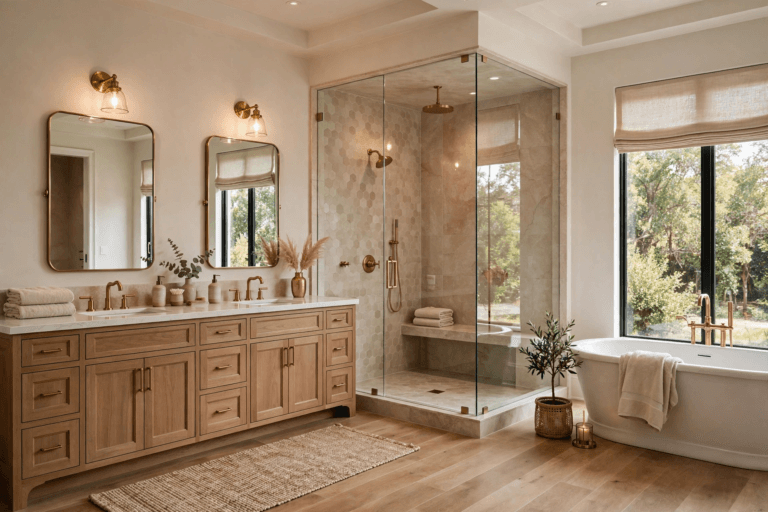
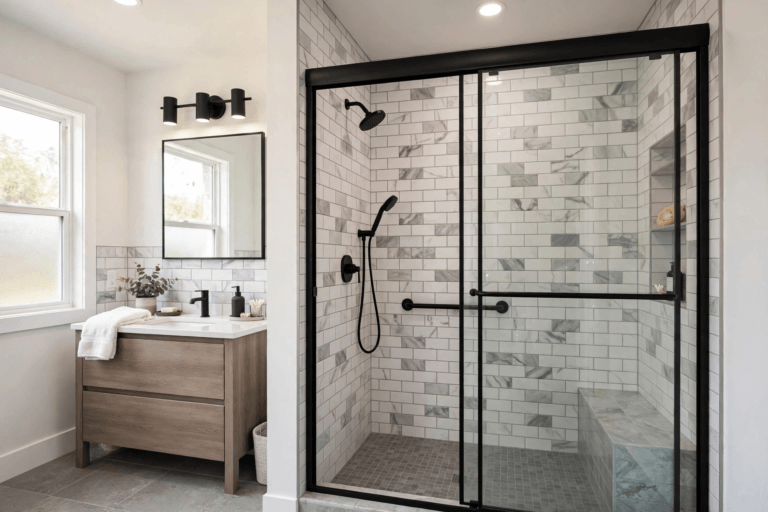
Frameless doors use thick 3/8″ to 1/2″ tempered glass with no frame — the glass is the structure, held by minimal hinges, clips, and clear seals. Each panel is custom-measured and fabricated, which drives both the price and the 2–5 week lead time. The payoff is a clean, open, modern look. Framed doors use thinner 3/16″ to 1/4″ glass in an aluminum frame with bottom tracks. The frame carries the structure, so the unit can be made in stock sizes — that’s the savings. Framed is the standard for tub-shower combos and budget remodels, including many tub-to-shower conversions. The semi-frameless middle ground (about $800–$1,300 installed in 2026 per Angi) trims the metal for a cleaner look.
Frameless vs. framed: side by side
| Feature | Frameless | Framed |
|---|---|---|
| Glass thickness | 3/8″ – 1/2″ tempered, self-supporting | 3/16″ – 1/4″ in an aluminum frame |
| Installed cost (2026 est.) | $1,000 – $3,000+; up to $5,000 premium | $500 – $1,200; stock bypass from ~$400 |
| Cleaning | Easiest — smooth glass, no crevices | Tracks and channels trap water and grime |
| Look | Open, modern, high-end | Traditional; visible metal lines |
| Leak control | Precise fit plus seals | Frame helps channel water back in |
| Lead time | Custom — often 2–5 weeks | Stock sizes; install in days |
| Best for | Custom showers, statement master baths | Tight budgets, standard openings, kids’ baths |
What each one really costs in 2026
These are estimates, not quotes. Framed: most homeowners pay $500–$1,200 installed, with a basic stock framed bypass door landing near $400–$750. Frameless: typically $1,000–$3,000 or more installed, with premium configurations (thicker glass, specialty hardware, neo-angle or floor-to-ceiling panels) pushing toward $5,000. You’re paying for custom fabrication, heavy tempered glass, machined hardware, and exacting installation. Site conditions add to both: out-of-plumb walls or a poorly sloped curb can add $200–$500. See our Dallas bathroom remodel cost guide for where the door fits in the full budget, and factor the lead time into your remodel timeline — a frameless door ordered late stalls the project at the finish line.
Cleaning: the real daily difference
This is where the styles split hardest. Framed doors — especially sliding bypass models — have tracks and channels that trap water, soap film, and grime, and in Dallas humidity those tracks are a mildew risk unless dried and wiped regularly (good bathroom ventilation helps). Frameless doors have almost nothing to trap anything: smooth glass, a couple of hinges, clear sweep seals. A 30-second squeegee after each shower is most of the maintenance. The Dallas caveat: hard water spots show more on clear glass — stay consistent with the squeegee, or choose frosted, rain, or textured glass to hide spotting on either style. Verdict: frameless is meaningfully easier to clean if you’ll squeegee; framed is more forgiving of neglect, at the cost of periodic track-scrubbing.
Leaks, safety, and installation
A framed door’s metal channel does real work: it catches runoff and steers it back into the shower, so it’s more forgiving of an imperfect opening. A frameless door has no channel — leak control comes from precise fit plus clear seals and sweeps. A well-installed frameless door doesn’t leak; a sloppy one can drip at hinge or seal gaps. That makes installer choice matter more — look for a contractor with dozens of frameless installs, not one doing their first (our guide to choosing a Dallas bathroom remodeling contractor covers how to vet that). Walls must be plumb and the curb properly sloped, or expect rework. Both styles use tempered glass; frameless panels are simply much heavier, so hinge quality and anchoring into framing (not just tile) matter.
Which one fits your Dallas bathroom?
Choose frameless for a statement shower. It’s the natural pick for a walk-in shower or master bath where the glass is part of the design — clear panels make even a modest shower read bigger and brighter. Open sightlines also help small bathrooms feel less cramped, a favorite trick in tight layouts. Choose framed when budget drives. At roughly half to a third of the frameless price, framed doors free up money for tile and fixtures people notice more — the practical pick for a standard tub-shower opening, a kids’ bath, or a rental. Watch the swing, whatever you pick: in a tight bathroom, a hinged door can hit the vanity or toilet, which is when a sliding/bypass door wins (typical sliding install averages near $950 nationally). Our walk-in shower cost breakdown shows how the glass line-item stacks up against tile, plumbing, and labor.
Get the right glass for your shower
Frameless glass sells the look; framed doors sell the value. Either way, the door decision is cheapest when it’s made before tile goes up — retrofits are possible, but never as clean. Planning your Dallas bathroom remodel? Call +1 (972) 833-6266 for a free consultation, and we’ll help you pick the glass, hardware, and layout that fit your bathroom and your budget.
How much does it cost to install a frameless shower door in Dallas?
In 2026, most frameless shower doors run $1,000–$3,000+ installed, with premium configurations (thicker glass, specialty hardware, neo-angle or floor-to-ceiling panels) reaching toward $5,000, per Angi’s 2026 data. Site fixes like out-of-plumb walls can add $200–$500, and custom fabrication takes 2–5 weeks — factor that into your remodel timeline. See our Dallas bathroom remodel cost guide for the full project picture.
Are frameless shower doors harder to keep clean than framed doors?
No — frameless doors are easier to keep clean, because there’s no frame track or channel trapping water and soap grime. Most maintenance is a 30-second squeegee after each shower. The Dallas caveat: hard water spots show more on clear frameless glass, so stay consistent with the squeegee, or choose frosted or textured glass to hide spotting.
Can I replace a framed door with a frameless one without remodeling?
Usually yes, as long as the opening is plumb and square and the curb and walls are solid — frameless panels are measured to your exact opening. The swap pairs naturally with a re-tile or a tub-to-shower conversion, when everything is already open and being refinished.
Which shower door is best for a small bathroom?
A sliding or bypass door, because it needs zero swing clearance — no door arc fighting the vanity or toilet. For the frame itself, frameless glass opens sightlines and makes a tight shower feel bigger. Our small bathroom remodeling guide covers more space-saving moves that pair well with the right door.
Do frameless shower doors leak more than framed doors?
Not when installed correctly. Frameless doors control water with precise fit plus clear seals and sweeps; a framed door’s channel simply makes it more forgiving of an imperfect opening. The deciding factor is installer experience — our contractor vetting guide explains how to check a contractor’s frameless track record.