When a Dallas homeowner starts planning to age in place, the bathroom is usually the first room that needs to change. Most falls at home happen in the bathroom, and the classic tub-shower combo — with its tall wall to climb over — is the single most dangerous fixture in the house. The two serious replacements are the walk-in tub and the walk-in shower, and they solve the step-over problem in very different ways, at very different prices.
Planning an aging-in-place bathroom in Dallas? Call +1 (972) 833-6266 for a free estimate — we’ll walk you through both options in your actual bathroom and give you an honest recommendation.
The core trade-off: soaking vs. stepping over
A walk-in tub has a watertight door near floor level. You step through, sit on the built-in seat, close the door, and let it fill around you. A walk-in shower has a low or zero-threshold entry — you simply walk or roll in. The trade-off: the tub gives you a deep, therapeutic soak with zero standing; the shower gives you speed, simplicity, and easier exit.
Neither is “better” in the abstract. The right answer depends on your mobility today, where it’s headed, whether soaking is a health need or a luxury, and your budget. Here’s how they compare on the dimensions that matter.
Walk-in tub: pros and cons
Pros: The low-step entry (typically 3 to 7 inches) plus a built-in seat means you never stand on one leg on a wet surface. Grab bars come standard. Hydrotherapy jets ease arthritis, joint stiffness, and poor circulation — for many seniors, that soak doubles as pain management. Most models fit the same footprint as a standard tub, so the remodel can be contained.
Cons: You must sit and wait while it fills and drains — typically 3 to 5 minutes each way. A single fill uses 50 to 80 gallons, far more than a shower. Getting out requires standing up from a seated position in a wet tub, which is its own fall risk. Jets need regular cleaning and descaling — and Dallas hard water means mineral buildup is a real maintenance factor.
Walk-in shower: pros and cons
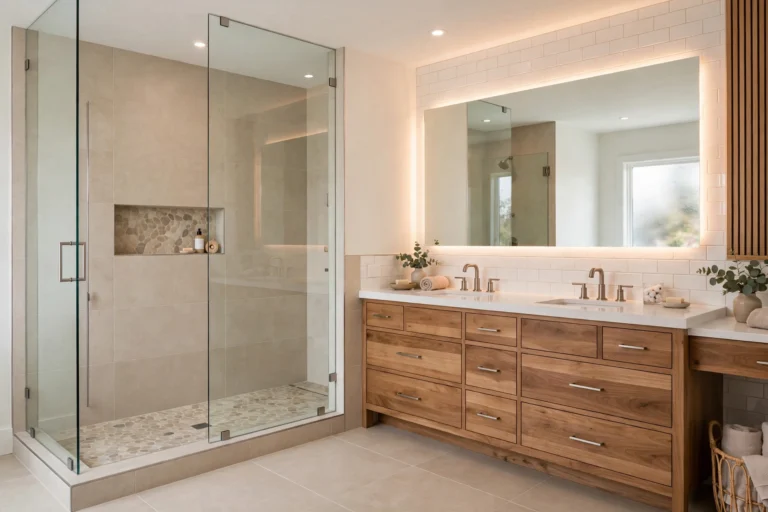
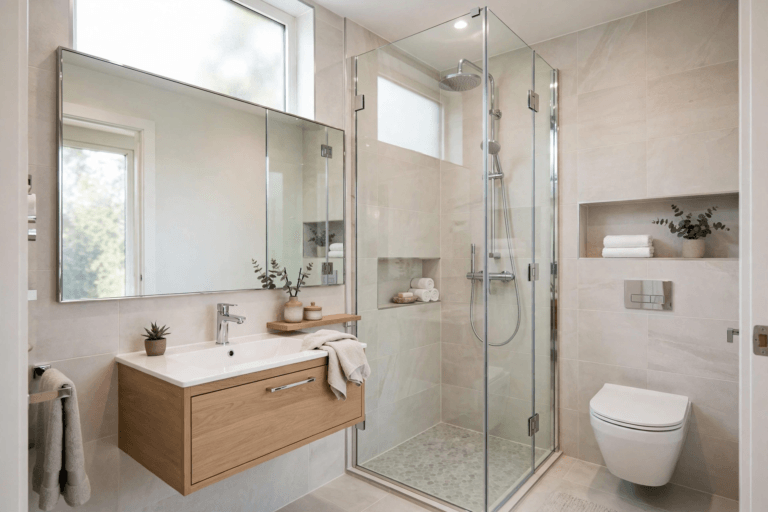
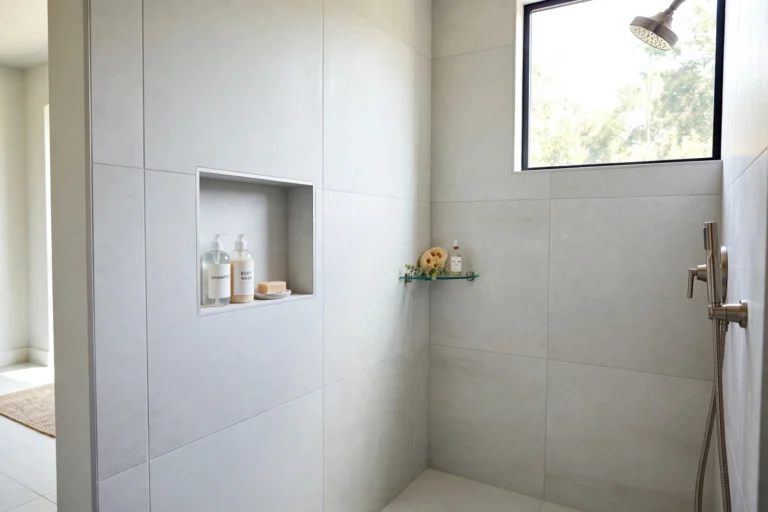
Pros: A curbless entry is the safest possible entry — nothing to step over, and a wheelchair can roll straight in. Showers are faster for daily bathing, use far less water, are easier to clean, and cost less to install. A walk-in shower with a fold-down bench and handheld showerhead gives you seated bathing too, at a fraction of the tub’s price. Showers also hold broader resale appeal.
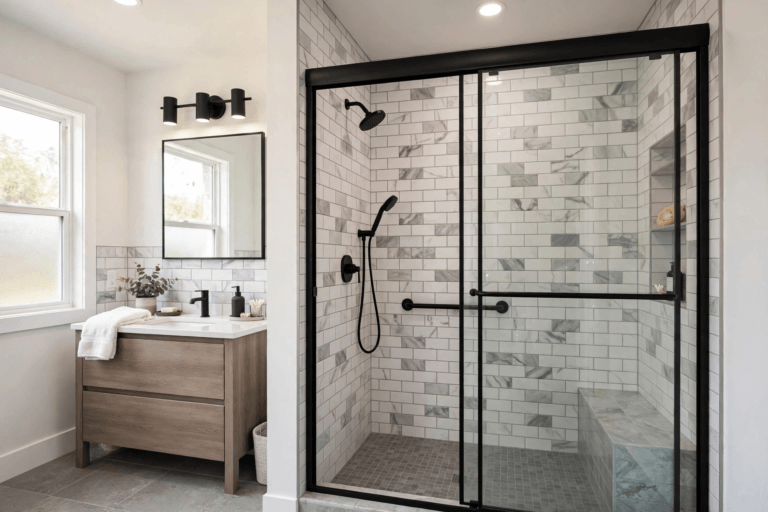
Cons: No soaking and no hydrotherapy jets — if warm-water immersion genuinely manages your pain, a shower can’t replicate it. Standing showers require balance, though a bench, grab bars, and a handheld head close that gap. Without a good glass enclosure, water can splash onto the floor. Custom tiled builds can still run $6,500 to $17,000.
Cost comparison (2026 estimates)
Costs are estimates — always get a written quote. A walk-in tub typically runs $8,000–$15,000+ installed, with budget models around $8,000–$9,000 all-in and premium national brands at $18,000+. A walk-in shower typically runs $2,500–$8,000+ installed, with prefab kits as low as $1,200–$4,000 and custom tiled builds at $6,500–$17,000. For broader project pricing, see our 2026 walk-in shower cost breakdown and the general Dallas bathroom remodel cost guide.
A tub swap takes 1–2 days (longer with plumbing or electrical changes); a custom shower takes 2–4 days. See our bathroom remodel timeline guide for what each phase involves.
Safety features that matter more than the choice
Whichever you pick, these details determine how safe it actually is: a threshold of 3 inches or lower, grab bars rated for 300+ pounds anchored to studs or blocking, an anti-scald valve, a quick-drain feature, non-slip flooring, and a handheld showerhead. For a tub, add an inline water heater so the soak stays warm; for a shower, add a fold-down bench and a grab bar near the controls.
One often-missed item: a walk-in tub can need 50–80 gallons per fill, so many installs pair it with a larger tank or tankless heater — and water-heater/electrical changes are permit territory (see our Dallas bathroom permit guide).
Resale and future-needs angle
If this is your forever home, choose purely on need. If you might sell within five to ten years, know that a walk-in tub appeals to a narrower pool of buyers — and removing the home’s only full bathtub can turn off families with small children. A walk-in shower reads as a broadly desirable modern upgrade. If a second bathroom has a tub, this concern mostly disappears. And if space is tight, our guide to small bathroom remodels shows how accessibility features fit even compact Dallas floor plans.
So which should you choose?
Choose the walk-in tub if: soaking or hydrotherapy genuinely manages pain, standing is difficult, and the higher cost fits your budget.
Choose the walk-in shower if: fall prevention is the primary goal, budget matters, you prefer quick daily showers, or a wheelchair may enter the picture.
Consider both if: you have two bathrooms — a tub for therapy days and a shower for daily speed. Our tub-to-shower conversion is Dallas’s most popular aging-in-place upgrade — the biggest safety gain per dollar.
The honest truth: most Dallas seniors we talk to choose the shower conversion first — it solves the central fall problem at a manageable price. The walk-in tub is the right premium choice when hydrotherapy is a medical-level need. Call +1 (972) 833-6266 — Bathroom Remodeling Dallas — for a free in-home estimate.
How much does a walk-in tub cost in Dallas?
As a 2026 estimate, expect roughly $8,000–$15,000+ installed, with budget models around $8,000–$9,000 all-in and premium national brands at $18,000 or more depending on features and bathroom conditions. Plumbing, electrical, and water-heater upgrades add to the total. For broader project pricing, see our Dallas bathroom remodel cost guide.
Which is safer for seniors — a walk-in tub or a walk-in shower?
It depends on the senior’s mobility. A walk-in tub eliminates stepping over a tub wall and provides a seated soak, but requires sitting through a 3–5 minute fill and drain and standing up from a seated position to exit. A curbless walk-in shower with a bench and grab bars has no step at all and lower exit fall risk, and a wheelchair can roll straight in. For most fall-prevention goals, a tub-to-shower conversion is the safer all-around choice.
Can a walk-in tub replace the only bathtub in my Dallas home?
Technically yes, but think about resale: removing the only full bathtub narrows your buyer pool, since families with small children generally want a tub. If a second bathroom has a tub, the concern mostly disappears. A walk-in shower conversion holds broader resale appeal as a modern accessibility upgrade.
Do walk-in tubs need a bigger water heater?
Often, yes. A walk-in tub can use 50–80 gallons per fill, more than a standard 40- or 50-gallon tank heater comfortably delivers — so many installations pair the tub with a larger tank or a tankless unit. Water heater and electrical changes typically need a permit, so factor that into your project plan.
How long does installation take — a walk-in tub or a walk-in shower?
A walk-in tub retrofit can take 1–2 days (longer if plumbing, electrical, or water-heater work is involved), while a custom walk-in shower typically takes 2–4 days. See our bathroom remodel timeline guide for what each phase of the project actually involves.