The best-looking bathrooms in Dallas right now share a secret that has nothing to do with tile color: they are built to work for everyone who walks in. A toddler, a grandparent, a guest with a sprained ankle — the room just works. That is universal design, and it is quietly becoming the smartest way to remodel a bathroom.
Universal design is not a product line or a style. It is seven principles, written at North Carolina State University in the 1990s, covering equitable use, flexibility, simple and intuitive use, perceptible information, tolerance for error, low effort, and room to approach and use everything. In practice it means making the layout, height, and traction decisions once, during a remodel, so the bathroom serves every body for twenty years. The National Association of Home Builders reports that 73% of remodelers have seen aging-in-place requests rise over the past five years, and a good finish package rarely adds more than 10 to 15 percent to the budget. Our aging-in-place checklist covers the safety side; this post is about the style side. To talk through either for your bathroom, call +1 (972) 833-6266.
1. The curbless shower is the whole idea in one feature
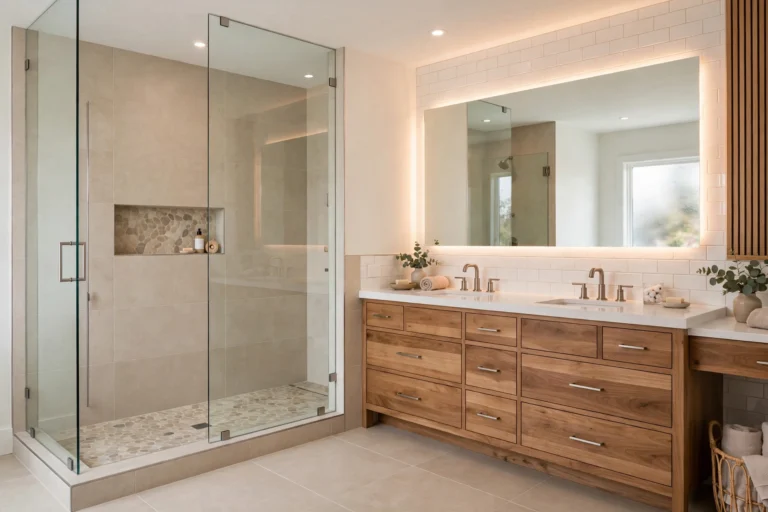
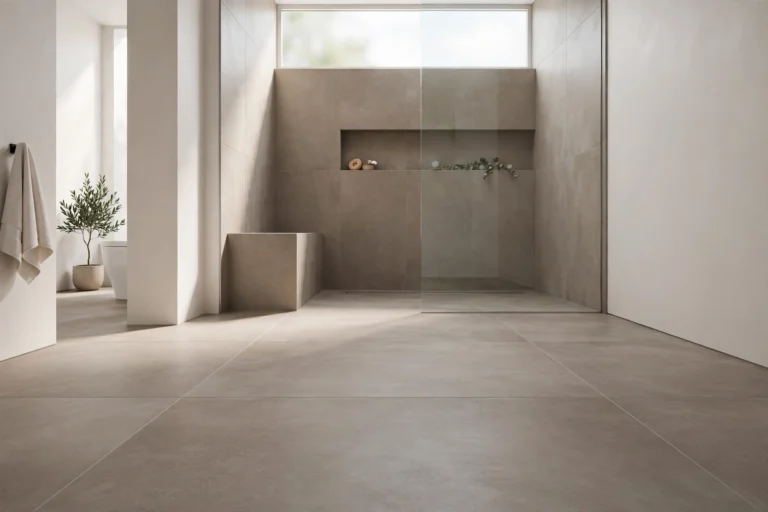
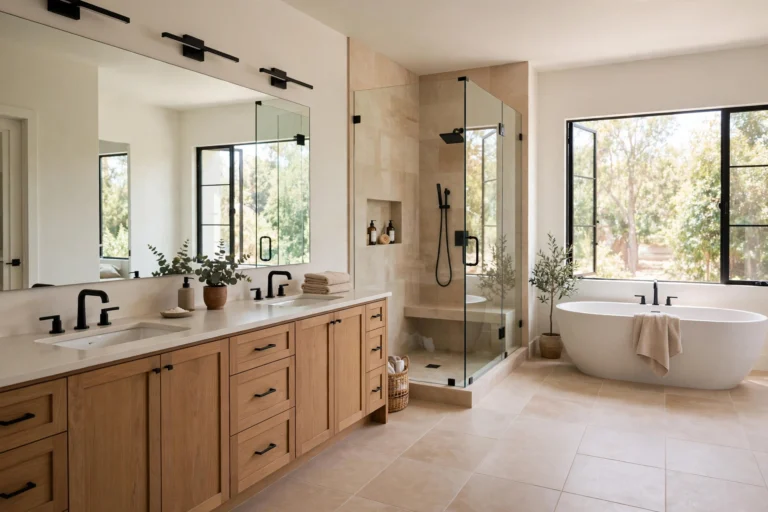
If you add one universal design feature, make it the shower. A curbless walk-in shower has no curb to step over — the floor runs level into the stall and slopes gently toward a linear drain. It is the single biggest fall-risk removal in the room, and one of the most wanted looks in Dallas bathrooms right now. A standard conversion typically runs $6,000–$10,000 installed in 2026, with custom tiled versions reaching $15,000+. On Dallas slab foundations, moving the drain is the part to plan carefully. A bench at 17–19 inches and a handheld showerhead on a slide bar make it work seated or standing. Our curbless shower guide covers costs and drainage, and our tub-to-shower conversion page covers the full swap.
2. Grab bars that read as design, not hardware
The fastest way to spot an old-fashioned accessible bathroom is the chrome bar screwed to the tile. The modern version hides in plain sight: matte black bars that match the faucet finish, and a bar that doubles as a towel rail. Installed cost runs about $100–$350 per bar, and the bar itself is the cheap part — the real work is the solid wood blocking inside the wall, rated to hold around 250 pounds at 33–36 inches above the floor. Add blocking during any remodel, even if you do not want bars yet: opening a finished tile wall later costs many times more. Place bars beside the toilet and along the shower wall in a matching finish — in a master bathroom remodel, they should be invisible until you need them.
3. Heights that quietly work harder
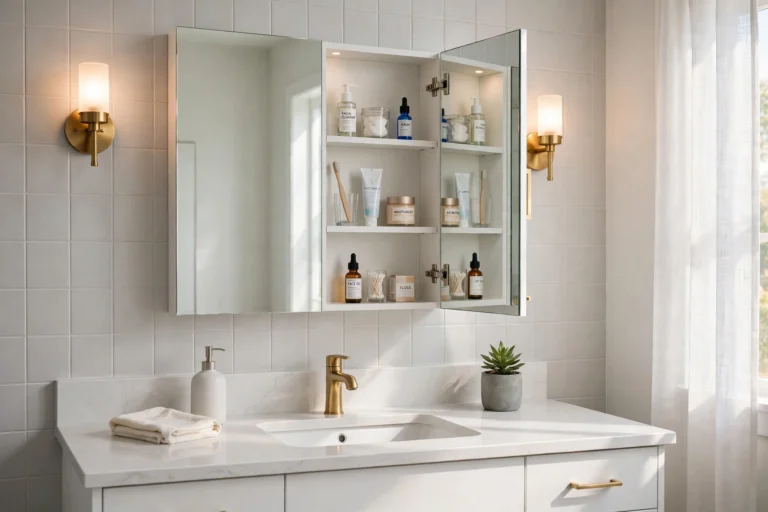
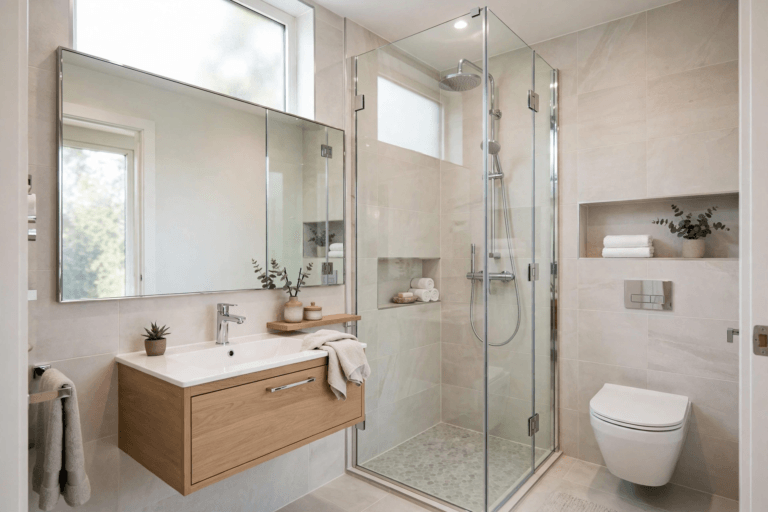
Comfort is mostly a matter of inches. A comfort-height toilet sits 17–19 inches high — about two inches taller than standard — and that small difference makes sitting and standing noticeably easier on knees and hips; installed cost is typically $400–$1,000. At the vanity, standard height is 30–32 inches, while most people find 34–36 inches more comfortable, and a wall-hung vanity leaves knee clearance underneath. Lever-handle faucets beat knobs for stiff, wet, or small hands. None of these look “accessible” — they look like good design. Our double vanity guide covers clearances, and our vanity top comparison covers durable surfaces.
4. Floors, light, and doorways do the quiet work
Polished stone and glossy large-format tile look beautiful and are the wrong choice here. The floor needs traction: smaller tiles with more grout lines, textured porcelain, or slip-resistant vinyl. Our bathroom flooring guide ranks the humidity-proof options for Dallas homes, and our grout color guide covers the best shade. Layer the lighting: bright overhead light, sconces beside the mirror (around 60–70 inches), and a motion-sensor night light for 3 a.m. trips — see our lighting guide. Finally, the doorway: 32 inches is the minimum, 36 inches is comfortable, and widening a non-bearing partition runs roughly $1,200–$2,800. Cheap during a remodel, expensive as a standalone job.
5. What it costs in Dallas (2026)
Every number below is an estimate, not a quote:
| Change | Typical cost (2026) |
|---|---|
| Safety package (bars, handheld, comfort-height toilet, lighting) | $3,000–$8,000 |
| Accessibility upgrades, layout kept | $8,000–$18,000 |
| Curbless walk-in shower conversion | $6,000–$10,000 |
| Full accessible bathroom remodel | $15,000–$35,000+ |
Spend first on the things that prevent falls — the shower entry, the bars, the floor — and last on finishes. Our Dallas bathroom remodel cost guide breaks down where the money goes.
6. Where to start if you are remodeling now
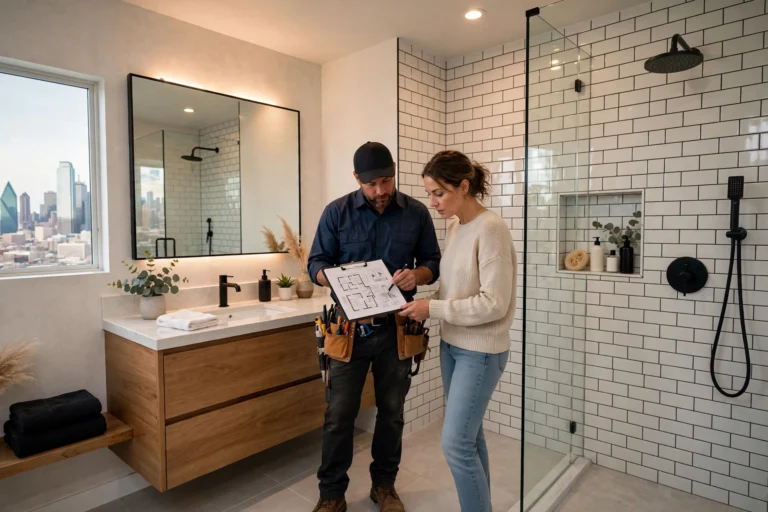
Sequence it so you never pay twice. First, anything inside the walls: grab-bar blocking, drain relocation, doorway widening. Second, the shower and the floor. Third, fixtures. Finishes and paint come last — see our bathroom remodel timeline. Moving plumbing or widening a doorway usually needs a permit; our Dallas bathroom remodel permit guide explains when one is needed.
Final call
Universal design is not a compromise for a future you. It is a bathroom that works for the toddler, the grandparent, and the guest with a sprained ankle — and looks like a high-end remodel while doing it.
Ready to build a Dallas bathroom that works for everyone in your house? Call +1 (972) 833-6266 for a realistic 2026 cost range.
What is universal design in a bathroom?
Universal design means building a bathroom that works for every age and ability without a separate accessible version: a level shower entry, grab bars, a comfort-height toilet, lever handles, and slip-resistant floors. The seven principles behind it come from North Carolina State University. Our aging-in-place checklist covers the safety details in full.
Will a universal design bathroom look like a hospital bathroom?
No — that is the point of doing it during a remodel instead of as a retrofit. A curbless shower reads as a spa feature, matte black grab bars double as towel rails, and a floating vanity looks like a design choice. Our curbless shower guide shows how the open-shower look works in Dallas homes.
How much does a universal design bathroom remodel cost in Dallas?
A safety package of grab bars, a handheld shower, a comfort-height toilet, and better lighting runs about $3,000–$8,000; accessibility upgrades keeping the existing layout run $8,000–$18,000; a full accessible remodel runs $15,000–$35,000 or more. Every figure is a 2026 estimate, not a quote. Our Dallas bathroom remodel cost guide breaks down where the money goes.
What is the single most important universal design feature to add first?
The shower. Removing the tub wall or shower curb eliminates the step-over on a wet floor — the most common fall scenario in the bathroom. A curbless walk-in shower also adds the most resale appeal of any single accessibility feature. See the options in our tub-to-shower conversion guide.
Can universal design work in a small bathroom?
Yes — some of it works better in a small bathroom. A curbless shower makes a small room feel larger, a floating vanity frees floor space, and lever handles and a comfort-height toilet cost the same as standard ones. The tight fit is the doorway and the turning circle: our small bathroom remodel guide covers the clearance rules.