The wall above your vanity does two jobs: it reflects you, and it stores what you reach for every morning. A plain mirror does the first job beautifully. A medicine cabinet does both — at the cost of a little planning. It is cheap to decide early and expensive to change after the tile is up. To talk through it for your bathroom, call +1 (972) 833-6266.
1. What each option actually is
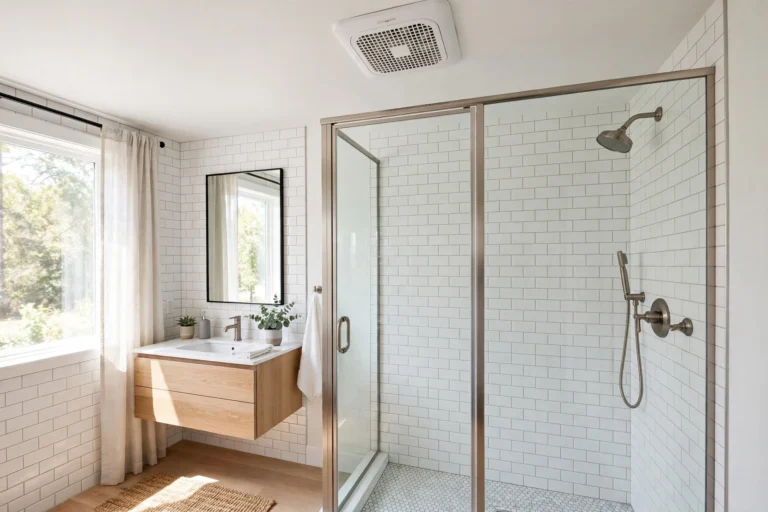
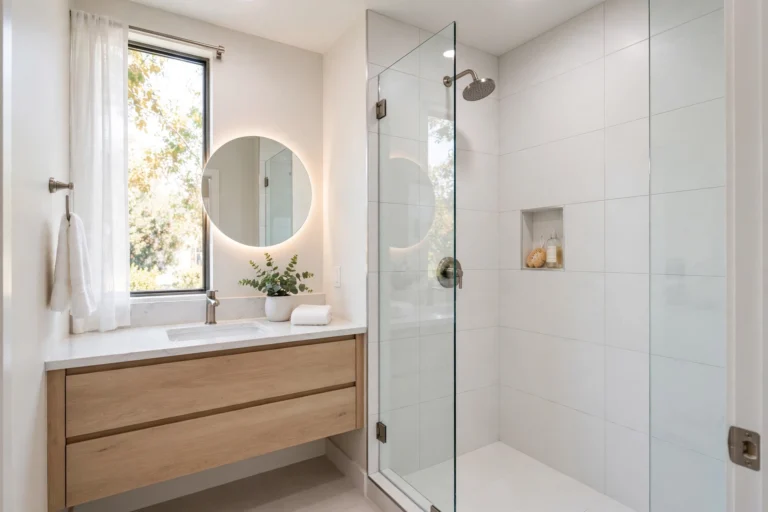
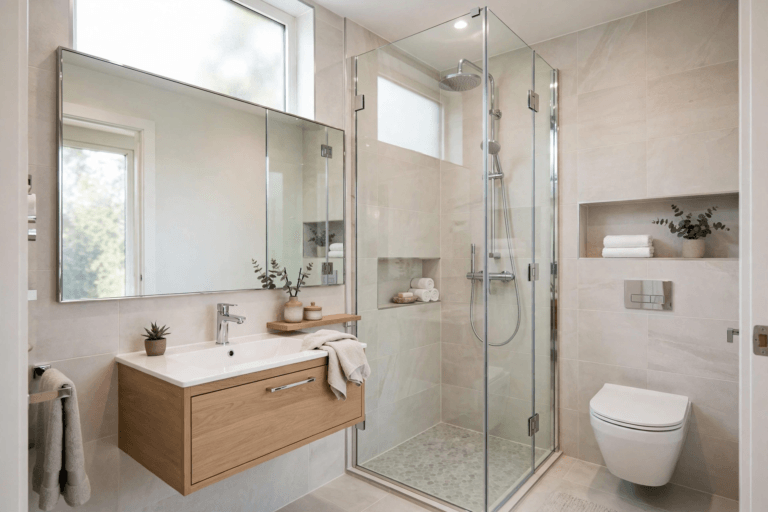
A vanity mirror is a reflective surface and nothing else — framed or frameless, round, arched, or wide. Its only job is grooming, and it comes in any shape, size, and finish you like. A medicine cabinet is a mirror with a shallow cabinet behind it: a hinged door opens onto adjustable shelves holding toothpaste, medication, and skincare, typically 4 to 6 inches deep. Newer models add LED lighting, anti-fog glass, and an outlet inside. The trade-off is simple: the cabinet hides clutter, the mirror shows off design. In a small bathroom remodel, hidden storage often matters more than design freedom.
2. Storage, side by side
List what you want to store first: a cabinet only helps if your tallest bottles fit inside, so check interior dimensions.
| What you store | Medicine cabinet | Plain mirror + vanity storage |
|---|---|---|
| Daily small items | Yes — eye level, behind the mirror | Needs a drawer or organizer |
| Tall bottles, hair dryer | Usually no — 4–6 in. depth limit | Yes — vanity drawers or a linen tower |
| Towels, backup supplies | No | Yes — linen cabinet or closet |
| Shared bathroom | Good — a shelf per person | Depends on drawer count |
If your vanity already has deep drawers and a linen closet sits nearby, the cabinet adds little. With a pedestal sink or a small vanity with almost no drawer space, the cabinet is often the only way to add storage without a full renovation. Our double vanity guide covers clearances for two people sharing the wall.
3. What it costs in Dallas (2026)
Every number below is an estimate, not a quote. A simple surface-mounted cabinet runs about $55–$300; LED-lighted and smart models run $400–$800. Pro installation is typically $60–$80 for a surface mount; a mid-range recessed cabinet installed totals roughly $339–$841, including the wall work. Recessing adds about $150–$300 in labor over surface mount. A flat vanity mirror is cheaper — roughly $110–$240 installed for a standard size. Our Dallas bathroom remodel cost guide breaks down where the money goes.
4. Recessed vs. surface-mounted: the wall decides
A recessed cabinet sits inside the wall cavity, so only the mirrored door and a thin frame show, saving 4 to 6 inches of room depth. But it needs a suitable wall: standard 2×4 stud walls are about 3.5 inches deep, and the cavity must be free of plumbing, drain and vent piping, and wiring. Kohler’s instructions say to reroute wires and lines out of the cavity and call a professional for load-bearing walls. A surface-mounted cabinet works on any wall and installs in under an hour, but it projects 4 to 6 inches into the room, so the door needs swing clearance. Moving plumbing or opening walls usually needs a permit; our Dallas bathroom remodel permit guide explains when one is needed.
5. When the medicine cabinet wins
The cabinet earns its spot when the vanity is small or a pedestal sink; when several people share the bathroom and each needs a shelf; and when daily items keep collecting on the counter. It also suits taller users and aging-in-place remodels, where eye-level storage beats a deep drawer — see our aging-in-place checklist. In Dallas, a cabinet also keeps medication and skincare behind a closed door, away from shower steam — see our mold prevention guide.
6. When a plain mirror wins
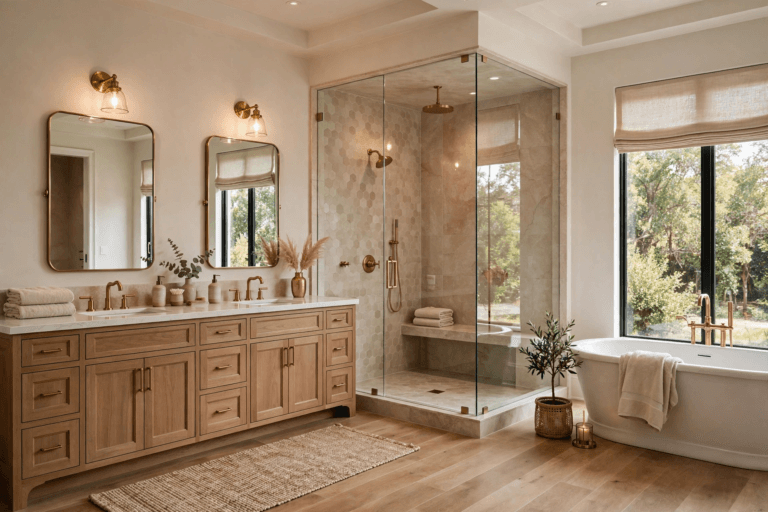
A plain mirror wins when the vanity already has enough drawers, when a linen closet is close by, or when the mirror itself is the design piece — a round mirror softening a boxy room, or a wide mirror spanning a 48-inch-plus double vanity, where a cabinet would look disproportionate. A large mirror also makes a small bathroom feel bigger, with total lighting freedom: sconces sit exactly where they flatter your face. Our bathroom lighting guide covers sconce placement and color temperature. Pair it with storage below the counter — our vanity top comparison covers durable surfaces.
7. Sizing, height, and the Dallas hard-water factor
Three rules before you order anything. First, size: most look best a little narrower than the vanity and centered over the sink — a 24-inch cabinet over a 30-inch vanity is a safe start. Second, height: hang it so the centerline sits about 60–65 inches from the floor. Third, cleaning: Dallas hard water leaves mineral spots on any mirror, and a cabinet door means two reflective surfaces to keep clear. A squeegee after showers, a weekly vinegar-water wipe, and an anti-fog coating keep it spotless — see our Dallas hard water guide. Decide early; our bathroom remodel timeline shows when the vanity wall gets decided.
Final call
Short on storage, small vanity, shared bathroom: take the medicine cabinet, recessed if the wall allows. Plenty of drawers or a linen closet nearby: take the plain mirror and spend the savings on lighting or a nicer vanity top. Either way, decide before the tile goes up.
Not sure which fits your Dallas bathroom? Call +1 (972) 833-6266 for a realistic 2026 cost range.
Can a medicine cabinet be recessed into any wall?
No. A recessed cabinet sits inside the wall cavity, so the wall decides: standard 2×4 stud walls are about 3.5 inches deep, and the cavity must be free of plumbing, drain and vent piping, and electrical wiring. Load-bearing walls and walls carrying a drain need a professional. Surface-mounted cabinets work on any wall. Our Dallas bathroom remodel permit guide explains when opening a wall needs a permit.
How much does a medicine cabinet cost installed in Dallas?
A simple medicine cabinet costs about $55–$300 for the unit, LED-lighted models $400–$800, and professional installation $60–$80 for a straightforward surface mount. A mid-range recessed cabinet professionally installed typically totals $339–$841. A plain flat vanity mirror runs roughly $110–$240 installed. Every figure is a 2026 estimate, not a quote. Our Dallas bathroom remodel cost guide breaks down the full remodel budget.
What size medicine cabinet should I get?
Most cabinets and mirrors look best a little narrower than the vanity and centered over the sink — a 24-inch cabinet over a 30-inch vanity is a safe starting point. Over a double vanity wider than 48 inches, a plain wide mirror usually looks better than a cabinet. Check the interior dimensions before ordering: the cabinet only helps if your tallest bottles fit inside. Our double vanity guide covers the clearance rules.
Does a medicine cabinet make a small bathroom look smaller?
A recessed cabinet does not — it sits flush with the wall, so it takes no room depth at all. A surface-mounted cabinet projects 4 to 6 inches into the room, which can crowd a very small bathroom. A large plain mirror has the opposite effect: it bounces light and makes the room feel bigger. Our small bathroom remodel guide covers the storage and space rules for tight Dallas bathrooms.
How do I keep a mirrored medicine cabinet clear in Dallas hard water?
Wipe the mirror with a vinegar-water solution once a week, squeegee after showers, and use an anti-fog coating on the glass. Hard water leaves mineral spots on any mirror, and a cabinet door means two reflective surfaces to keep clear. A closed cabinet also protects medication and skincare from shower steam. Our Dallas hard water guide covers the fixture side of the same problem.