Mold in a Dallas bathroom is almost always a moisture problem, not a cleaning problem. You can scrub the grout spotless on Saturday and still find dark spots back a few weeks later, because the damp air, standing water, and slow leaks feeding mold are still there. Dallas makes it harder: long humid summers and many older homes with weak exhaust fans. Prevention is mostly habit plus a few smart fixes — here is a practical plan that keeps a bathroom mold-free. Questions about your own bathroom? Call Bathroom Remodeling Dallas at (972) 833-6266.
Why Dallas bathrooms grow mold so easily
Mold needs three things: moisture, warmth, and something to feed on. A bathroom supplies all three every day. A single hot shower can push a small room’s humidity above 80 percent, and steam settles on the coolest surfaces — mirrors, ceilings, tile, and grout lines. Soap scum gives spores a food source, and damp towels hold moisture for hours. In Dallas, outdoor humidity stays high much of the year, so a bathroom that never fully dries between showers rarely recovers. Prevention means one thing above all: get the room dry, and keep it dry.
1. Run the exhaust fan every time — and long enough
Ventilation is the single most effective mold-prevention tool, and also the most underused. Switch the fan on before you shower and leave it running 20 to 30 minutes afterward, until the mirror is clear. A timer or humidity-sensing switch removes the guesswork. Size matters too: the common rule is about 1 CFM per square foot of floor area, so a 60-square-foot bath needs roughly a 60 CFM fan. And the fan must vent outdoors — one that dumps steam into the attic simply moves the mold problem out of sight. Our guide to bathroom ventilation and exhaust fans covers sizing, sones, and the attic-venting mistake in detail.
2. Dry the shower after every use
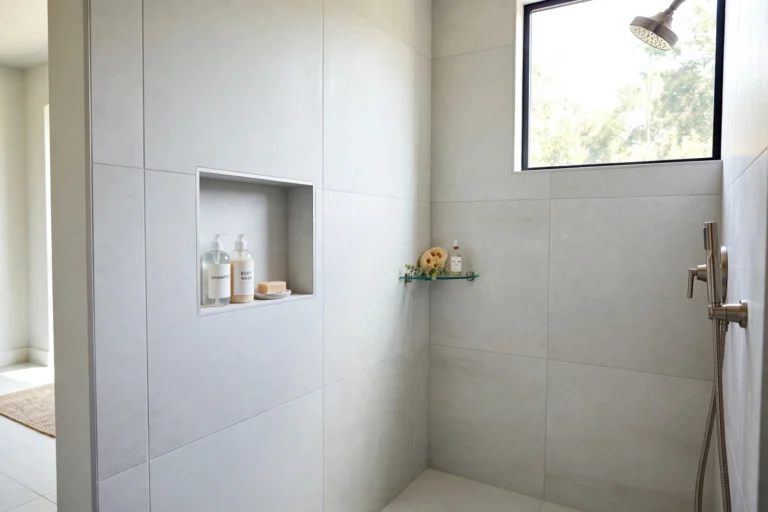
A two-minute habit after each shower removes most of the water mold would otherwise feed on. Squeegee glass and tile from top to bottom, wipe the tub ledge and corners where water pools, and crack the shower door or curtain so air circulates. Hang towels spread out on a bar, and lift the bath mat off the floor so both sides dry. In a small bathroom, where steam concentrates fast, this habit matters even more — and a walk-in shower with a properly sloped floor drains faster and leaves fewer puddles than an old tub-shower combo.
3. Seal grout, watch caulk, and clean weekly
Cement grout is porous, so unsealed grout soaks up water and holds it. Seal grout after installation and re-seal about once a year in a heavily used shower. Check caulk lines around the tub, shower, and floor every six to twelve months: cracked or black-spotted caulk lets water behind the tile, where scrubbing cannot reach it. If mold is under the surface of silicone caulk, cleaning will not fix it — cut the old bead out, let the joint dry, and recaulk with a mildew-resistant silicone. A weekly wipe-down also removes the soap scum mold feeds on; see our comparison of tile vs. acrylic shower walls for which surfaces are easiest to keep clean, and our shower niche vs. corner shelf guide for details that reduce standing water.
4. Fix leaks fast — within 24 to 48 hours
Even a small drip keeps materials damp enough for mold to grow, and slow leaks are the usual cause of mold that keeps returning in the same spot. Check under sinks, around toilet bases, and behind tubs for drips, stains, or soft spots. Repair leaks and dry wet materials within 24 to 48 hours where possible — mold can begin growing on damp surfaces in as little as a day or two. A musty smell that persists after cleaning, or soft paint and drywall, may mean a hidden leak worth investigating before it becomes a larger repair. Our bathroom remodel timeline guide explains how leak repairs fit into a typical renovation schedule.
5. Remodel upgrades that prevent mold for good
If you are already planning a remodel, several upgrades make mold prevention nearly automatic. Mold-resistant drywall in wet areas, epoxy grout instead of cement grout, and a properly waterproofed shower pan all reduce the places moisture can hide. A tub-to-shower conversion with a curbless or low-threshold entry, a linear drain, and large-format tile means fewer grout lines and faster drainage. Upgrading the exhaust fan and ducting while walls are open is far cheaper than doing it later. And humidity-proof flooring such as porcelain tile or quality luxury vinyl plank will not swell or feed mold the way some older materials can. For realistic budget ranges, see our Dallas bathroom remodel cost guide.
When mold means a bigger problem
Most surface mold on tile and grout is a cleaning job. But call a professional if mold covers more than about 10 square feet, keeps returning in the same spot, grows on drywall, or comes with a musty smell you cannot trace. Those signs often point to a hidden leak or moisture inside a wall cavity — problems surface scrubbing will never solve.
Ready to fix the root cause? Call Bathroom Remodeling Dallas at (972) 833-6266 to talk through ventilation, shower, and waterproofing upgrades for your Dallas bathroom.
How long should I run my bathroom exhaust fan after a shower?
Run it during the shower and for at least 20 to 30 minutes afterward, until the mirror is clear and the room feels dry. A timer or humidity-sensing switch makes this automatic. Our bathroom ventilation guide explains fan sizing and why the duct must vent outdoors, not into the attic.
What indoor humidity level prevents mold in a bathroom?
Aim to keep indoor relative humidity between 30 and 50 percent, and below 60 percent at all times — the ceiling recommended by health authorities. If your bathroom stays damp long after a shower, the exhaust fan is undersized, vented incorrectly, or missing entirely, and that is the first thing to fix.
How often should I seal grout and replace caulk?
Seal cement grout after installation and re-seal about once a year in a heavily used shower, following the sealer manufacturer’s schedule. Check caulk every 6 to 12 months and replace it when it cracks, peels, or shows mold under the surface. See our tile vs. acrylic shower walls guide and shower niche guide for surfaces that are easier to keep dry.
Can I clean small bathroom mold myself?
Yes, surface mold on tile, grout, and glass is usually a DIY cleaning job with a bathroom cleaner labeled for mold, a stiff brush, and good ventilation. Call a professional if mold covers more than about 10 square feet, keeps returning in the same spot, or grows on drywall — those signs point to a hidden leak or moisture inside the wall.
Which bathroom remodel upgrades prevent mold best?
The most effective upgrades are a correctly sized exhaust fan vented outdoors, a waterproofed shower with epoxy grout and large-format tile, mold-resistant drywall in wet areas, and a well-sloped shower floor that drains fully. A tub-to-shower conversion or walk-in shower with these details, plus humidity-proof flooring, removes most of the places mold can hide. See our Dallas remodel cost guide for budget ranges.