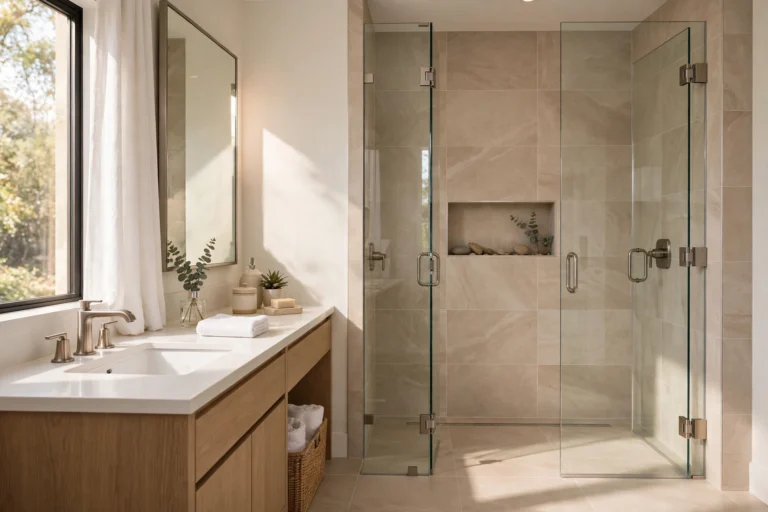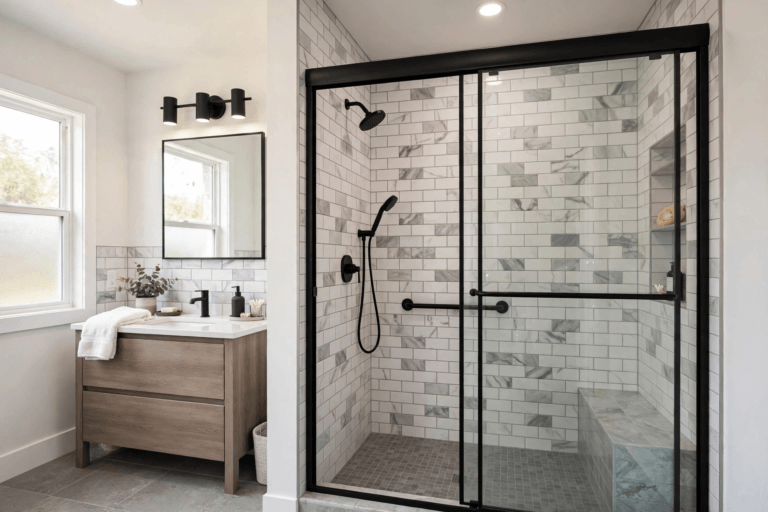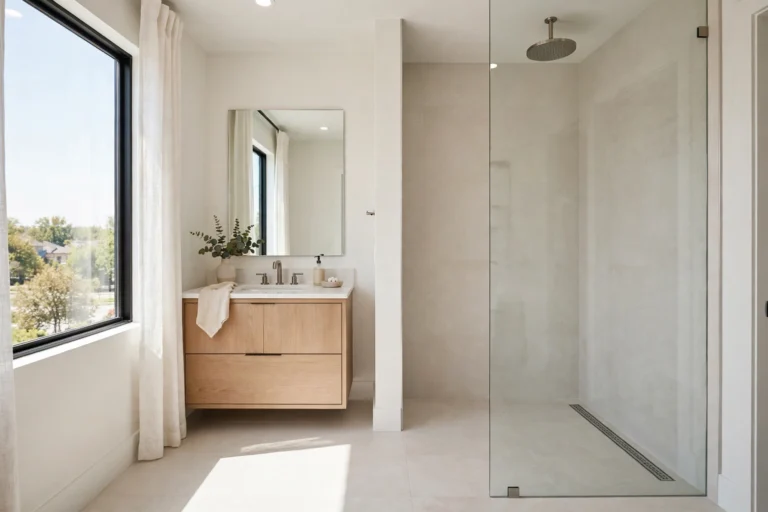
Grout is the smallest line item on most remodel quotes, and the one you will notice every single day. In a typical shower the joints add up to a tenth or more of everything you see, so the color you pick sets the mood of the room and the size of your cleaning job. This guide walks through the choice the way a Dallas homeowner should make it, with hard water and humidity in the picture. Our cost guide shows where tile and grout sit in a full remodel budget, and if you want to talk through tile choices, call +1 (972) 833-6266.
Start with the tile, not the grout
Ask what should stand out: the tile, or the pattern the joints make. Grout close in shade to the tile lets the surface read as one calm plane, which suits small bathrooms and large-format tile. Grout that contrasts with the tile outlines every piece and turns the layout itself into the feature — white subway tile with dark gray joints is the classic example. Contrast only works when the setting is precise, because strong contrast shows every wavy line. Look at it at full scale before you commit. Our tile versus acrylic guide covers the tile side of the decision.
Light grout: bright, airy, demanding
White and off-white grout make a small bathroom feel larger and look spotless on day one. The price is upkeep: cement grout is porous, so it soaks up soap scum and mildew, and white shows all of it, yellowing first. Light grout is not a mistake, it is a maintenance commitment. If you love it, sealing is not optional, and epoxy is worth the upgrade in a shower. For the rest of the room, our bathroom flooring guide pairs floor choices with the same thinking.
Dark grout: hides dirt, shows minerals
Charcoal and black grout hide dirt and soap scum better than any pale shade, which makes them the practical pick for shower floors, and they give a room instant structure. The trade-offs are real: dark joints can make a small room feel heavier, and Dallas hard water leaves white mineral crust that stands out on dark grout. Dark grout can also fade with heavy cleaning, though epoxy holds its color far better than cement. Our walk-in shower guide shows where dark grout usually earns its place.
Mid-tone grout: the low-drama default
Mid-gray, warm greige, and warm taupe are the workhorses. They hide everyday dirt without turning the tile into a checkerboard, they suit white, cream, and light stone-look tile, and they are the most forgiving choice for floors and shower walls. If you are torn between light and dark, mid-tone is the answer most Dallas homeowners end up happiest with. It also pairs well with the tub-to-shower swaps many older Dallas baths are getting.
The material matters as much as the color
Color gets the attention, but grout type decides how it ages. Cement grout is the standard: affordable, easy to work with, and porous, so it needs sealing about once a year and looks tired within five to eight years in a wet shower. Epoxy grout is a two-part resin that cures into a dense, non-porous solid: no sealer, resists stains, holds its color, and lasts fifteen to twenty years in a wet area. For a shower floor or any joint that stays wet, epoxy is worth paying for; for dry walls, sealed cement grout is fine.
Dallas hard water changes the math
Dallas water is hard, and minerals are what ruin most grout, not foot traffic. They leave white crust on dark grout and gray film on light grout, and they soak into unsealed cement grout. That is why mid-tone grout wins in Dallas: it hides both kinds of mark better than either extreme. Two habits beat any cleaner: squeegee the shower walls after every use, and run the exhaust fan during the shower and for twenty minutes after, because grout that stays damp grows mildew. Our ventilation guide explains the fan side, and our mold prevention guide covers what happens when moisture wins.
A cleaning routine that works
Most grout damage comes from cleaning too hard, not too little. Once a week, use a pH-neutral tile cleaner and a soft nylon brush on the lines, then rinse. A few times a year, go deeper with an alkaline grout cleaner or oxygen bleach in warm water, left to dwell, then rinsed. For stains, a paste of baking soda and 3% hydrogen peroxide works — test a small patch first, since it can lighten color. Skip vinegar and acidic cleaners on cement grout and stone, skip routine chlorine bleach, and skip wire brushes. Never mix bleach with vinegar or ammonia: it releases toxic gas in a small closed bathroom. Once a year, drip water on a clean, dry joint. If it soaks in and darkens the grout, the sealer is gone — clean, dry for a day, then reseal.
Try it cured, in your own light
Wet grout looks much darker than cured grout, so judge the cured sample, not the bucket. Color also reads differently under warm LEDs, daylight, and recessed lights; matte tile softens grout lines while glossy tile sharpens them. Before your installer starts, ask for a test board: your tile, your grout color, grouted and cured, viewed in your bathroom’s light. It costs almost nothing and it is the only way to know. See our remodel timeline to plan when tile and grout work happens.
The short version
Match the grout when you want the tile to shine, contrast it when you want the pattern to shine, and default to mid-tone gray or greige for the easiest life. Choose epoxy for the shower floor, seal cement grout yearly, squeegee after every shower, and let a test board make the final call.
Planning a tile or shower update? Call +1 (972) 833-6266 to talk through tile, grout, and 2026 costs for your Dallas bathroom.
What grout color shows the least dirt?
Mid-tone gray, warm greige, or warm taupe hide everyday dirt, soap film, and hard-water marks better than either extreme. Pure white shows stains fastest; very dark grout shows white mineral scale just as clearly. See how they pair with the options in our bathroom flooring guide.
Is white grout a bad idea in a shower?
Not bad, just high maintenance. White looks clean and classic, but cement grout is porous and white shows soap scum, mildew, and yellowing faster than any other color. If you want white in a shower, choose epoxy grout, which is non-porous and holds its color, and seal cement grout every year. Our mold prevention guide explains what shower moisture does when it wins.
Epoxy grout or cement grout for a Dallas shower?
For a shower floor or any joint that stays wet, epoxy: no sealer, resists stains and hard-water minerals, holds color, and lasts 15–20 years in a wet area against 5–8 for cement grout. It costs more and is harder to install. Sealed cement grout is fine for dry walls. Our walk-in shower guide covers the full shower scope.
How often should grout be sealed?
Cement grout about once a year; epoxy and urethane grout never need sealing. Test it: drip water on a clean, dry joint — if it soaks in and darkens the grout within a minute, the sealer is gone. Clean first, let it dry fully for at least a day, then apply a penetrating sealer. Good ventilation helps too — see our bathroom ventilation guide.
Can grout color change without retiling?
Yes. A grout colorant — a tinted sealer applied over cleaned, prepped grout — can recolor existing grout without removing tile. It works best on cement grout that is sound and fully clean; cracked or crumbling grout should be regrouted instead. Our Dallas bathroom remodel cost guide has the cost context for regrouting versus a bigger update.